Aluminum Tile Trim Thickness: Wholesaler Guide | DYM Decor
- Share
- publisher
- Ciel
- Issue Time
- May 30,2026
Summary
Master aluminum tile trim thickness ranges. Learn the formula for selecting correct profile depths (8mm/10mm/12mm) & avoid supply chain tolerance traps.
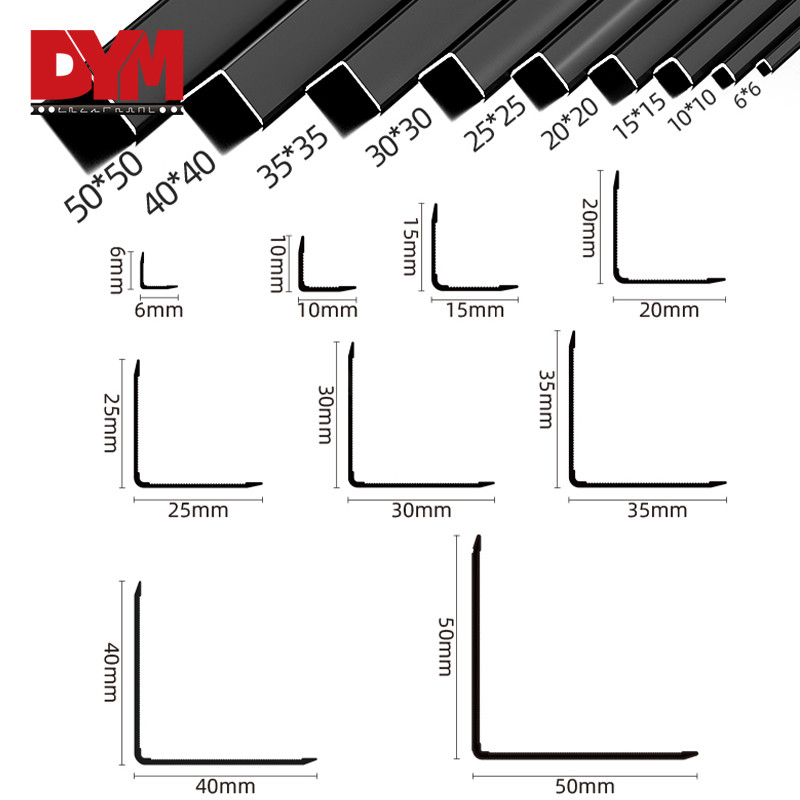
The Ultimate Wholesaler’s Guide to Aluminum Tile Trim Thickness
For B2B wholesalers and engineering contractors, sourcing aluminum tile trims isn't just about picking a design or a color. It comes down to technical precision. In the global construction market, specifying the correct aluminum profile thickness is the thin line between a flawless, high-end installation and a catastrophic project failure that leads to expensive callbacks.
As a leading global manufacturer operating advanced extrusion facilities across China and Vietnam, DYM Decor (dymdecor.com) provides this comprehensive technical guide to help you master thickness ranges, select the right gauges for specific applications, and establish trust with your commercial clients.
Quick Summary: Standard Aluminum Tile Trim Thickness Matrix
To help procurement managers quickly review architectural specifications, here is the standard specification matrix implemented across DYM's global manufacturing hubs:
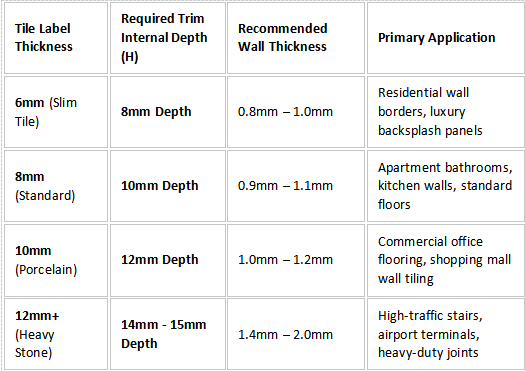
Understanding Aluminum Tile Trim Thickness Ranges
When discussing "thickness" with a factory, global buyers must distinguish between two separate metrics: Profile Base/Wall Thickness (structural durability) and Tile Accommodating Depth (the height of the tile it can accept).
Structural Wall Thickness (The Material Gauge)
This is the actual thickness of the aluminum sheet post-extrusion. It determines the weight, pricing, and structural integrity of the profile.
0.6mm – 0.8mm (Economy / Light-Duty)
Budget residential retail, low-traffic wall borders, DIY markets.
0.9mm – 1.1mm (Standard / Commercial): The Global B2B Sweet Spot.
Standard residential, apartments, commercial walls.
1.2mm – 2.0mm+ (Heavy-Duty / Structural):
High-traffic floors, stair nosing, expansion joints, airport/mall expansions.
2. The Golden Rule of Thickness Selection: The Formula
One of the most common mistakes local importers and installers make is buying a tile trim that matches the exact catalog thickness of the tile. This always results in the trim sitting lower than the tile surface.
To establish your authority as an expert wholesaler, always teach your clients this simple industry formula:
Required Trim Depth (H) = Tile Thickness + Compressed Adhesive Layer (approx. 1.5mm - 2.0mm)
Practical Example: If your contractor is installing a standard 8mm large-format porcelain tile, they should purchase a 10mm depth aluminum trim. Squeezing an 8mm tile into an 8mm trim leaves zero room for the tile thin-set (grout/adhesive), causing the tile edge to stick out and create a hazardous chipping or tripping point.
3. Application Scenarios Matrix (Where to Deploy What)
To optimize your inventory rotation, you need to stock thicknesses mapped to local architectural blueprints. Here is how DYM categorizes application scenarios:
Scenario A: High-Traffic Floor Transitions & Stair Nosing
Recommended Wall Thickness: 1.4mm - 2.0mm
Why? Floor joints and stair edges bear the constant impact of heavy foot traffic, wheeled luggage, and maintenance carts. Thinner profiles< 1.0mm will dent and warp under heavy loads, causing the surrounding tiles to crack.
Scenario B: Modern Bathroom & Kitchen Backsplashes
Recommended Wall Thickness: 0.9mm - 1.2mm
Why? Wall applications require a balance of sleek aesthetics and impact resistance against accidental bumps. A 1.0mm profile extruded from premium 6063-T5 aluminum alloy offers the perfect rigidity without adding unnecessary freight weight.
Scenario C: Luxury Wall Inlays & Slender U-Channels/T-Profiles
Recommended Wall Thickness: 0.8mm - 1.0mm (Decorative only)
Why? Slim decorative lines (like 3mm mini U-channels) do not bear structural loads. Here, the focus is on precise edge straightness and flawless surface treatments (such as Anodized Champagne Gold or Brushed Chrome), rather than brute thickness.
4. The DYM Factory Advantage: Spotting "Fake Thickness" in the Supply Chain
As a professional buyer, you are likely aware that some low-tier suppliers cut corners to offer artificially low prices. They do this via two methods that undermine your business reputation:
1. Tolerance Manipulation:
A factory might quote a 1.0mm trim but deliver a 0.85mm product, claiming it falls under "standard production tolerance." At DYM, we maintain strict CNC extrusion tolerances within 0.03mm, ensuring what you sign on the blueprint is exactly what arrives at your warehouse.
2. Anodizing Flaws:
Lower-grade factories over-etch the metal during the chemical polishing phase, which thins the walls and leaves the profile brittle. Our multi-stage anodizing line seals the surface with a consistent 10-12um oxide layer, enhancing structural strength without compromising dimensions.
💡 B2B Buyer Note on Global Logistics (2026):
With advanced manufacturing facilities operating in both China and Vietnam, DYM allows international wholesalers to multi-source aluminum profiles seamlessly. This dual-factory infrastructure completely mitigates anti-dumping risks and scales perfectly with your local project supply chain.
Partner with DYM for Engineered Precision
Wholesalers don't just buy products; they buy risk mitigation. When you partner with DYM (dymdecor.com), you gain access to factory-direct engineering support:
A: Custom Extrusion Dies: Need a specialized 1.5mm wall thickness for a government infrastructure project? We can design and cut custom CNC dies in-house within 7 days.
B: Material Transparency: All shipments come with chemical composition certifications for our 6000-series aluminum alloys.Stop losing clients to low-quality trims that warp and dent. Upgrade your B2B inventory with factory-certified precision.